
Olympic FootballAnd The England Amateur Team
The Olympic football tournament has never been popular with British teams but, thanks to the England amateur side, Great Britain were the ones to beat in the early Olympic football competitions.
The turn of the twentieth century saw Edwardian England embracing professional football with the creation of the English Football League though many clubs, players and fans stayed loyal to the amateur game.
With the 1908 Olympics being held in London, and featuring football for the first time, there was a great opportunity for the amateurs to show the upstart professionals that they were still the top performers.
All the matches were played at the White City Stadium with England, or rather Great Britain, beginning their competition with a 12-1 win over Sweden in front of a 2,000 crowd. Claude Purnell netted four times and Harry Stapley repeated the feat by notching all four in the semi-final win over the Netherlands.
For the gold medal they would face Denmark who reached the final by beating France B 9-0 and then demolishing the A team 17-1! The French were so traumatised by the thrashing that they went straight home giving up their place in the bronze medal match to the Dutch.
The final of the very first Olympic football tournament was played in front of a crowd 8,000 at the White City and a goal in each half from Fred Chapman and the prolific Vivian Woodward was enough to win the gold medal.
There is some ambiguity over who captained the side with various sources crediting both Chapman and Woodward with the honour though the later is the more likely candidate.
Woodward was a free-scoring forward who began his career with Clacton before moving to Tottenham and represented both the amateur and full national teams.
And, it was Woodward who captained the Great Britain team, again the English amateur side in everything but name, as they defended their Olympic title in Sweden in 1912.
Eleven teams entered the 1912 tournament with Great Britain given a bye to the Second Round were they defeated Hungry 7-0; Harold Walden bagging six of the goals with Woodward scoring the other.
The semi-final saw Great Britain cruise past Finland after taking the lead with a second minute own goal. Walden, who would serve with distinction in the First World War before becoming a film actor, hit a double and Woodward again got on the score-sheet.
The Olympic football final was again contested with Denmark and again the English amateurs proved to be a class above the opposition winning the match 4-2 in front of 25,000 spectators at the Stockholm Olympiastadion.
The next Olympic football tournament was played in Belgium in 1920 with Great Britain falling at the first hurdle complaining bitterly that most teams were fielding professionals. The Belgium v Czechoslovakia final of the 1920 tournament was refereed by 72 year-old Englishman John Lewis who had also taken charge of the 1908 final whilst still a spring chicken of 60.
Lewis, who had referred three FA Cup Finals, so upset the Czech’s with his handling of the game that they walked off the pitch in the 43rd minute and refused to return.
A pitch invasion bizarrely led by Belgian soldiers ended all hope of the match being restarted and the Czech’s were eventually disqualified.
1908 Olympic Football TournamentRound One Denmark 9-0 France B Great Britain 12-1 Sweden Semi-Finals Great Britain 4-0 Netherlands Denmark 17-0 France A Bronze Medal Match Netherlands 2-0 Sweden Final Great Britain 2-0 Denmark
1912 Olympic Football TournamentRound Two Finland 2-1 Russia Great Britain 7-0 Hungary Denmark 7-0 Norway Netherlands 3-1 Austria Semi-Finals Great Britain 4-0 Finland Denmark 4-1 Netherlands Bronze Medal Match Netherlands 9-0 Finland Final Great Britain 4-2 Denmark |
|
|
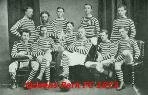
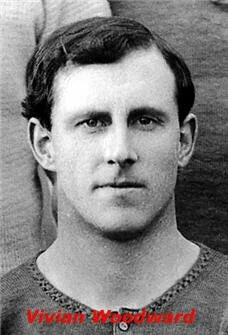 The Football Association entered the England Amateur side to represent Great Britain in the first Olympic football tournament.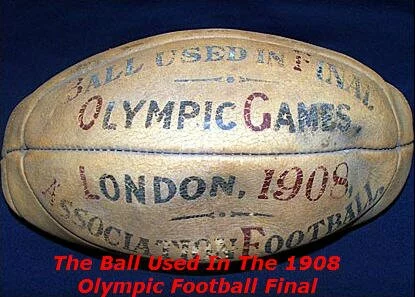
 Delicious
  Digg
Digg  Facebook
  Google Bookmarks
  Furl
Furl  Stumbleupon
  Yahoo My Web

Copyright NonLeague Football History 2008