
Walter TullA Genuine Hero From The History Of Nonleague Football
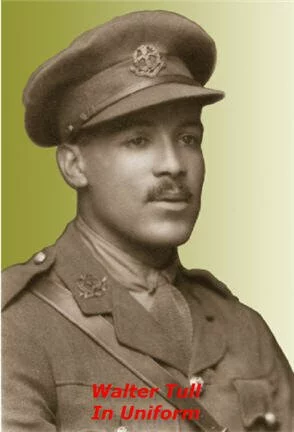
Walter Tull is a the kind of man who should never be forgotten both by those within and without the game of nonleague football.
An Amateur Cup winner, snapped up by a top flight professional club leaves the game to fight for his country becoming an officer and a hero in the First World War.
It reads like something out of Boys Own comic but the story of Walter Tull is not fiction but is instead one of the most remarkable in football. But what makes his story even more incredible is that Walter Tull was black.
As such his story is not only important from a football perspective but also from a social history standpoint.
The grandson of a slave Tull was born in Folkestone in 1888, one of six children from a mixed marriage who were left orphans by the early death of both parents. Raised from the age of nine in a Bethnal Green orphanage Tull became an apprentice printer before joining top London amateur club Clapton after impressing in a trial game.
In 1908/09 Walter Tull helped Clapton to an amazing treble of FA Amateur Cup, London Senior Cup and London Amateur Cup with the skilful inside-forward being described as “the catch of the season.”
The young player regularly made the headlines with his outstanding play and such was his reputation that Tottenham signed him on at the maximum professional rate of £4 per week and even paid a £10 signing on fee.
When Tull made his debut for Spurs in a 3-1 defeat to Manchester City he became only the second black man to play professional football in England following in the footsteps of Preston’s Arthur Wharton.
Despite the press claiming that he was a “class superior to his colleagues” Walter Tull was only an occasional choice for Spurs and after a couple of frustrating seasons he was transferred to Northampton whose manager, the legendary Herbet Chapman, was said to have splashed out a substantial fee.
The free scoring forward quickly became an idol at the County Ground though he was a regular target of abusive opposition fans and his performances caught the eye of several bigger clubs.
But when, on the eve of a move to Glasgow Rangers in 1914, war was declared, Tull immediately quit football and, like many of his professional colleagues, joined the army by enlisting in the 17th (1st Football) Battalion of the Middlesex Regiment.
Tull’s extraordinary abilities and personalities were quickly recognised by the military and after distinguishing himself at the Battle of the Somme he was commissioned and became the first ever British born black officer to serve in the army.
Very popular with his troops Lieutenant Tull was tragically killed by machine gun fire at Favreuil towards the end of the war. Despite repeated efforts by his men Tull’s body wasn’t recovered but he was posthumously awarded the Military Cross.
Walter Tull was just 29 when he died and the story of how an orphaned black boy from Bethnal Green became a top amateur and then professional footballer before giving his life for his country is a truly inspiring one. |
|
|
 Delicious
  Digg
Digg  Facebook
  Google Bookmarks
  Furl
Furl  Stumbleupon
  Yahoo My Web

Copyright NonLeague Football History 2008